Trend review
The most important trends are the ones that change operator behavior
Big market numbers matter, but the stronger lens is this: which shifts are forcing haulers to price better, dispatch tighter, and run leaner operating systems?
Trend snapshot
| Trend | Why it matters | What operators should do |
|---|---|---|
| Pricing discipline is becoming a competitive advantage | Input volatility makes loose rate cards more dangerous | Standardize quoting and protect margin with clear rules |
| Labor pressure remains persistent | Driver and dispatcher hiring still shapes service quality | Benchmark pay and reduce avoidable route friction |
| Route density matters more than broad growth | Thin growth creates noisy revenue with weak margin | Focus on density, territory quality, and customer mix |
| Asset utilization is getting board-level attention | Idle containers and slow turns tie up capital | Track dwell time and revenue per asset more tightly |
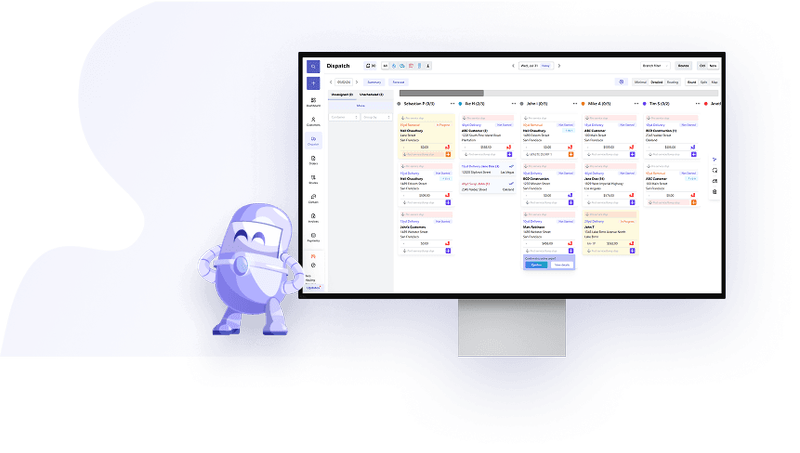
| AI-assisted workflows are moving from novelty to expectation | Operators want faster intake, cleaner follow-up, and lower admin drag | Adopt automation where it directly supports dispatch and billing |
1. Pricing discipline is now strategic
More operators are realizing that growth without price control is fragile. Disposal, labor, and fuel pressure make stale pricing models expensive to defend. The practical response is better quote logic, cleaner change-order rules, and faster price reviews for recurring work.
If you run roll-off or open-top work, the dumpster rental pricing calculator and roll-off pricing calculator are a good place to start.
2. Labor pressure is still reshaping the business
The labor story is not just about wage inflation. It is also about schedule quality, overtime, route reliability, and how much operational chaos drivers or dispatchers absorb. Better software and cleaner routines matter because they reduce the friction that makes hard jobs even harder.
Use the salary guide, garbage collector salary by state, and the waste industry salary atlas together when you want a fuller picture of labor pressure.
3. Route density beats undisciplined expansion
Operators are getting more rigorous about what kind of revenue they want. Thin work across too much geography creates weak routes and tired teams. In contrast, denser territory supports stronger profitability, cleaner dispatch, and better customer response times.
That is why route optimization and route density should be reviewed together, not as separate initiatives.
4. Utilization is moving into the weekly operating review
Capital-heavy operators are watching container dwell time, idle assets, and revenue per box more carefully. In a stronger market, it is easy to hide these issues. In a disciplined market, they become obvious quickly.
The container utilization calculator is useful because it translates operational drag into a financial conversation leadership can act on.
5. AI is being judged by workflow value, not novelty
The AI conversation is maturing. Operators do not care about abstract capability nearly as much as they care about whether AI improves response time, quote follow-up, order capture, dispatch clarity, or billing accuracy. That is the right bar.
When AI is attached to an actual operating loop, it becomes valuable. When it is detached from the workflow, it becomes noise.
Frequently asked questions
What are the biggest waste management trends in 2026?
Pricing discipline, labor pressure, route density, asset utilization, and AI-assisted operating workflows are among the most important trends affecting day-to-day operators.
Why are route density and utilization getting more attention?
Because they connect directly to fuel, labor efficiency, and capital productivity. Busy operations still underperform when density and utilization are weak.
How should operators react to these trends?
Strengthen pricing rules, review labor design, tighten route and territory decisions, monitor asset turns, and adopt software where it directly improves workflow quality.
Where can I benchmark these shifts?
Use industry statistics for market context, salary pages for labor, pricing calculators for quoting discipline, and route or utilization tools for operating performance.
What to do next
Use the industry statistics page for the broader market view, then pair it with the container utilization calculator, the route profitability calculator, and our dispatch standardization guide so the trend conversation turns into actual operating changes.