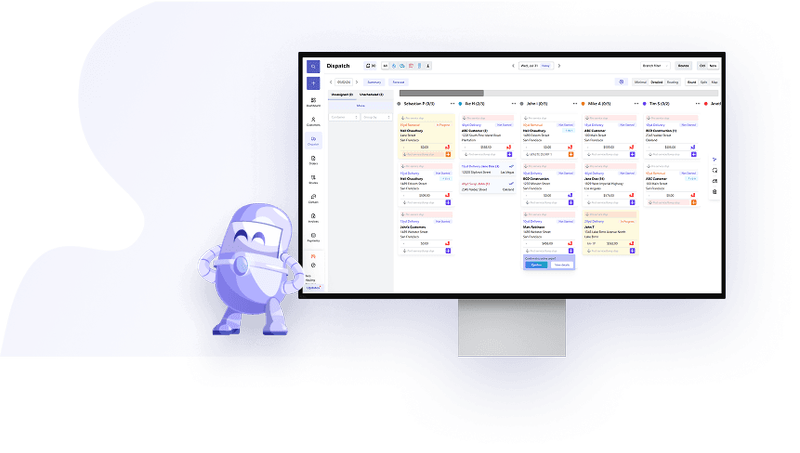

Dispatch system
Standardized dispatch reduces both labor strain and revenue leakage
When every dispatcher solves the day differently, route quality drops, billing becomes inconsistent, and training never really finishes.
Why multi-line dispatch gets messy
Multi-line operations carry different service models, different timing rules, and different billing implications. If the dispatch logic is mostly tribal knowledge, new hires struggle, exceptions get handled inconsistently, and the accounting team ends up cleaning up after operations.
Standardization is not about making dispatch rigid. It is about making the core decisions predictable so the team can spend judgment where it matters most.
What to standardize first
| Dispatch layer | Why it matters | What to document |
|---|---|---|
| Board ownership | Everyone needs to know who owns which line of business and time window | Primary owner, backup owner, and escalation path |
| Exception rules | Missed stops, locked gates, overloads, and same-day adds should not be improvised | Decision tree plus proof requirements |
| Billing handoffs | Many dispatch decisions affect what can be billed | Document what proof or note is required for each charge type |
| Daily review cadence | Without a repeatable review rhythm, yesterday's mistakes repeat today | Pre-route review, mid-day escalation, end-of-day cleanup |
How to standardize without slowing the team down
Start with the exceptions that create the most confusion or billing pain, not with a giant dispatch manual. Write those rules down, show them in the board workflow, and train against real examples. Then add the next layer once the first one sticks.
Good waste hauler software helps because it creates a shared operating system for those decisions instead of relying on memory and side messages.
Frequently asked questions
What is dispatch standardization?
Dispatch standardization means documenting and repeating the core rules for board ownership, exception handling, and billing-impacting decisions so the team operates consistently.
Why is dispatch harder in multi-line hauling?
Because each line of business carries different route rhythms, service assumptions, and billing consequences, which creates more exceptions and handoffs.
What should I standardize first?
Start with the exceptions and handoffs that create the most operational confusion or revenue leakage, then build from there.
What to do next
Pair this guide with the garbage route planner hub, the waste industry salary atlas for dispatcher-role context, and the waste hauler software page so training, tooling, and dispatch design all move in the same direction.