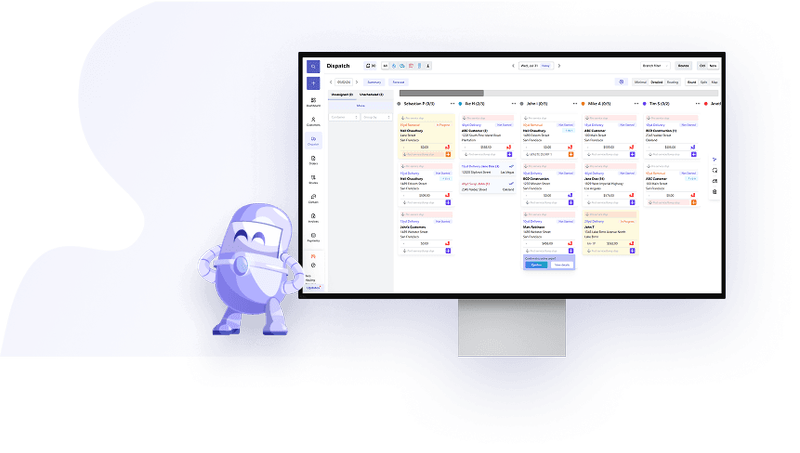
Work Order
Learn what work order means in waste hauling, why it matters for dispatch, and how software buyers should evaluate it before rollout.
Plain-language definition
A work order is the operational record that tells the team what work to perform, where to perform it, when it is due, and how it should be completed or billed.
Why buyers ask about it
Work orders are where sales, service, dispatch, and billing meet. A weak work order structure creates unclear instructions and missed charges.
How software changes the workflow
Good software connects work orders to customer accounts, route assignments, driver proof, assets, pricing, and invoice closeout.
Related resources
Compare waste dispatch software, waste hauler software, and order-to-cash workflows.
How this affects haulers
Industry definitions are useful when they connect back to operations: service planning, route density, disposal decisions, customer communication, compliance records, and margin visibility.
How TrashLab handles this workflow
TrashLab turns those operating details into structured records across dispatch, routing, billing, reporting, and customer communication so haulers can act on the term instead of just define it.
Related resources
Related guides, tools, and software
Use the glossary definition as a starting point, then jump into the workflow, benchmark, or calculator that makes the term practical.