Stop Density
Learn what stop density means in waste hauling, why it matters for routing, and how software buyers should evaluate it before rollout.
Plain-language definition
Stop density is the concentration of service stops in a route area, often measured as stops per mile, stops per hour, or stops within a neighborhood.
Why buyers ask about it
Stop density affects fuel, labor, and service consistency. Low density creates windshield time that customers rarely see but operators pay for every day.
How software changes the workflow
Software gives buyers a way to compare actual stop clusters against sales territory, service frequency, and route profitability rather than judging routes by total stop count alone.
Related resources
See route density, garbage truck routing software, and route density guide.
How this affects haulers
Routing and dispatch terms show up in daily service performance: route sequence, missed pickups, driver hours, same-day changes, customer calls, and billable exceptions.
How TrashLab handles this workflow
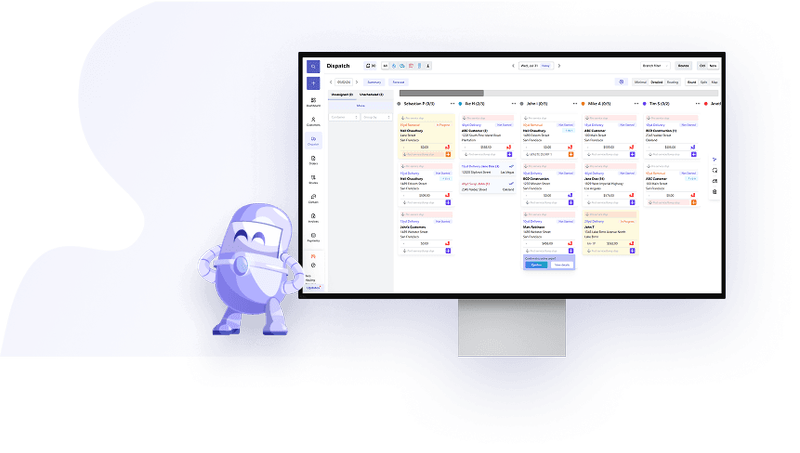
TrashLab keeps automated trash route scheduling, dispatch updates, driver proof, customer context, and billing handoff in the same workflow so route decisions turn into cleaner service records.
Related resources
Related guides, tools, and software
Use the glossary definition as a starting point, then jump into the workflow, benchmark, or calculator that makes the term practical.