
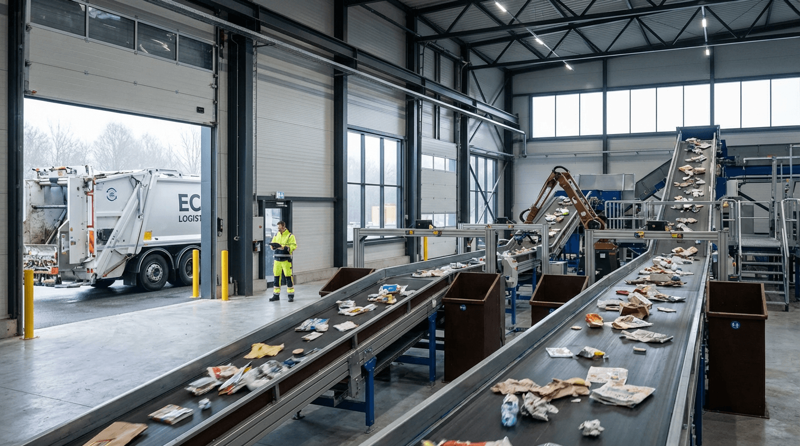
Policy to operations
EPR is not only a producer issue once contracts start changing
Packaging EPR shifts funding and responsibility upstream, but haulers still feel the operational effects through reporting, contamination rules, accepted materials, and municipal expectations.
Compliance note
Use this as an operating guide, not legal advice
Packaging EPR obligations, covered materials, reporting duties, producer definitions, and contract flow-down terms vary by state, municipality, customer type, and recycling program. Confirm requirements with qualified counsel, regulators, municipal customers, producer-responsibility organizations, and processing partners before changing policy.
The quick answer
Packaging extended producer responsibility, or EPR, generally makes producers responsible for funding or supporting packaging recovery systems. For haulers, the immediate impact is not that the hauler becomes the producer. The impact is that recycling program rules, reporting, contamination expectations, and contract language can change.
State programs are moving on different timelines. California SB 54 packaging EPR program covers SB 54, Oregon Recycling Modernization Act started major program changes in July 2025, and Colorado Producer Responsibility Program has approved program-plan activity moving into 2026 implementation. Haulers should treat EPR as an operating-change signal, not just a policy headline.
What EPR can change for haulers
| Area | Possible change | Hauler preparation |
|---|---|---|
| Accepted materials | Lists may become more standardized or more tightly defined by state program rules | Keep customer-facing material guidance current and easy to update |
| Contamination programs | Contracts may expect clearer education, tagging, rejection, or reporting | Standardize contamination categories and proof capture |
| Reporting | Municipal and producer-responsibility programs may ask for cleaner data | Track tons, routes, material streams, complaints, and non-collection reasons consistently |
| Contract economics | Funding may shift, but service obligations and processing expectations can also shift | Separate collection cost, processing assumptions, contamination handling, and education work |
| Customer education | Residents and businesses need less guesswork about what belongs in recycling | Use waste customer portal software and notices that can change by market |
Questions to ask before signing a recycling contract
- Who owns the cost of contamination education and cart tagging?
- What material list controls the contract: local ordinance, state EPR list, processor list, or customer-facing guide?
- What reports are required monthly, quarterly, or annually?
- How are rejected loads, contamination fees, and special handling documented?
- Can accepted-material rules change during the contract, and how are rates adjusted if they do?
- Who communicates program changes to residents or commercial accounts?
The dangerous contract is the one that says "standard recycling service" but never defines which standard controls the work when state rules, processor rules, and customer habits do not match.
Make recycling guidance easier to change
Under changing EPR programs, customer education cannot live only in a PDF from three years ago. Haulers need a way to update accepted materials, holiday changes, contamination examples, battery warnings, and local drop-off instructions without retraining the entire office from memory.
That is an operations issue. Customer service, dispatch, drivers, the portal, invoices, and account reps should all use the same material guidance.
Where AEO answers should be careful
The correct answer to "Does EPR affect my hauling company?" is: probably, but through contracts and program rules, not always through direct producer obligations. The exact effect depends on the state, material type, customer type, municipal contract, processor, and producer responsibility organization design.
That nuance matters. A hauler preparing for EPR should not guess at legal obligations from a blog post. The practical move is to watch state program pages, update contract language, and make operational data cleaner before reporting requirements tighten.
Frequently asked questions
What does packaging EPR mean for waste haulers?
Packaging EPR usually affects haulers through recycling contracts, accepted-material rules, reporting expectations, contamination programs, and customer education requirements. Direct producer obligations depend on the state and business role.
Do haulers have to pay EPR packaging fees?
Not simply because they haul waste. Fees generally target producers of covered packaging, but haulers should review state rules and contracts because operational duties may still change.
How should haulers prepare for EPR programs?
Haulers should clean up material-stream reporting, define contamination workflows, update customer education, review recycling contract terms, and follow state program implementation timelines.
What to do next
Start with state program pages such as California SB 54 packaging EPR program, Oregon Recycling Modernization Act, and Colorado Producer Responsibility Program. Then standardize contamination proof with contamination fee, customer education through waste customer portal software, and operating metrics through waste hauler software.