Contamination Fee
Learn what contamination fees are in waste hauling, why proof matters, and how clear billing rules protect recycling, organics, and disposal margins.
Plain-language definition
A contamination fee is a charge applied when a container includes material that does not match the agreed service stream or creates extra handling, processing, disposal, or rejection cost.
Key operating signals
- The accepted material rules were clear before service.
- Driver or facility proof shows the contamination issue.
- Billing applies the fee consistently enough that customers understand the behavior to correct.
Why it matters operationally
Contamination can turn a profitable pickup into a rejected load, added labor, disposal downgrade, or customer dispute. The fee only works when it is attached to education and proof, not just added after the fact.
How software changes the workflow
Good software makes contamination visible across service proof, customer notes, billing, and route review. That lets managers separate one-off mistakes from accounts that need a different service plan or a different price.
Related resources
Use the proof-of-service billing guide for documentation standards, review disposal impacts in the disposal fee passthrough guide, and model route impact with the route profitability calculator.
How this affects haulers
Industry definitions are useful when they connect back to operations: service planning, route density, disposal decisions, customer communication, compliance records, and margin visibility.
How TrashLab handles this workflow
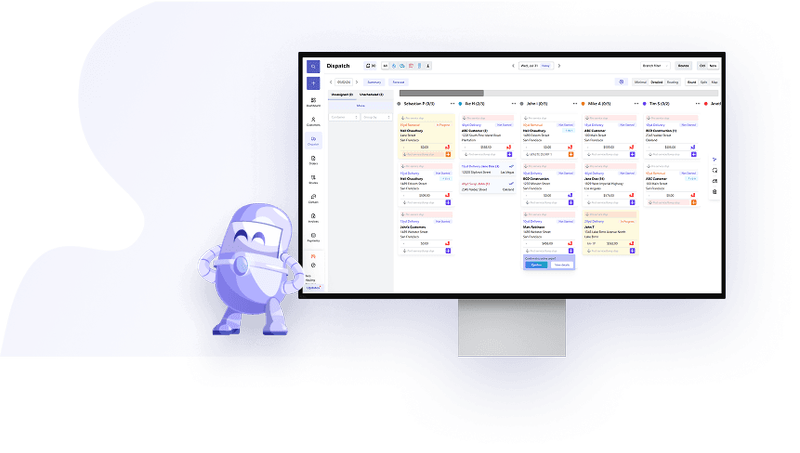
TrashLab turns those operating details into structured records across dispatch, routing, billing, reporting, and customer communication so haulers can act on the term instead of just define it.
Related resources
Related guides, tools, and software
Use the glossary definition as a starting point, then jump into the workflow, benchmark, or calculator that makes the term practical.