Route Rebalance
Learn what route rebalance means in waste hauling, why it matters for routing, and how software buyers should evaluate it before rollout.
Plain-language definition
A route rebalance is a planned adjustment to move stops, customers, or service days between routes so workload and economics improve.
Why buyers ask about it
Routes drift as customers are added, lost, or changed. Rebalancing prevents inherited route structure from becoming permanent inefficiency.
How software changes the workflow
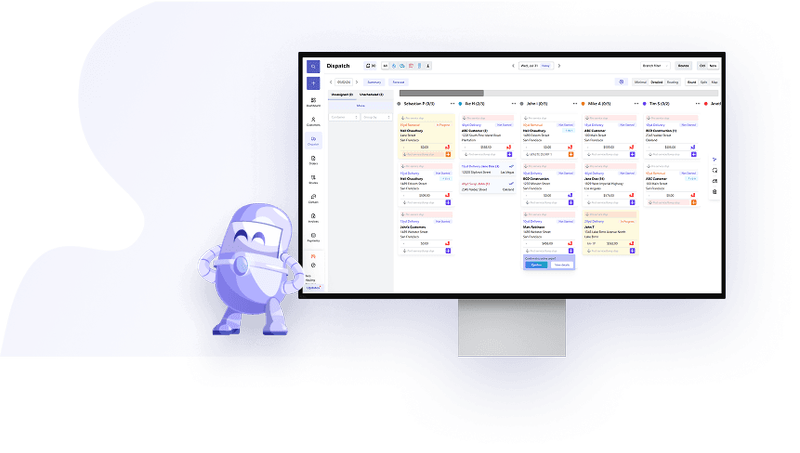
Software helps test route moves, compare before-and-after workload, and keep customer schedule changes coordinated with communication and billing.
Related resources
Compare route management software, waste route audit playbook, and waste route optimization software.
How this affects haulers
Routing and dispatch terms show up in daily service performance: route sequence, missed pickups, driver hours, same-day changes, customer calls, and billable exceptions.
How TrashLab handles this workflow
TrashLab keeps automated trash route scheduling, dispatch updates, driver proof, customer context, and billing handoff in the same workflow so route decisions turn into cleaner service records.
Related resources
Related guides, tools, and software
Use the glossary definition as a starting point, then jump into the workflow, benchmark, or calculator that makes the term practical.