Route Optimization
Learn what route optimization means in waste hauling, why it matters for routing, and how software buyers should evaluate it before rollout.
Plain-language definition
Route optimization is the use of constraints, maps, service rules, and operating data to improve how routes are built, sequenced, or adjusted.
Why buyers ask about it
Buyers should separate route optimization from simple map drawing. The useful version reduces time, miles, missed service, and dispatch rework.
How software changes the workflow
Good routing tools optimize around real hauling constraints such as disposal stops, truck type, container access, service windows, and driver familiarity.
Related resources
Compare waste route optimization software, garbage route planner, and route density.
How this affects haulers
Routing and dispatch terms show up in daily service performance: route sequence, missed pickups, driver hours, same-day changes, customer calls, and billable exceptions.
How TrashLab handles this workflow
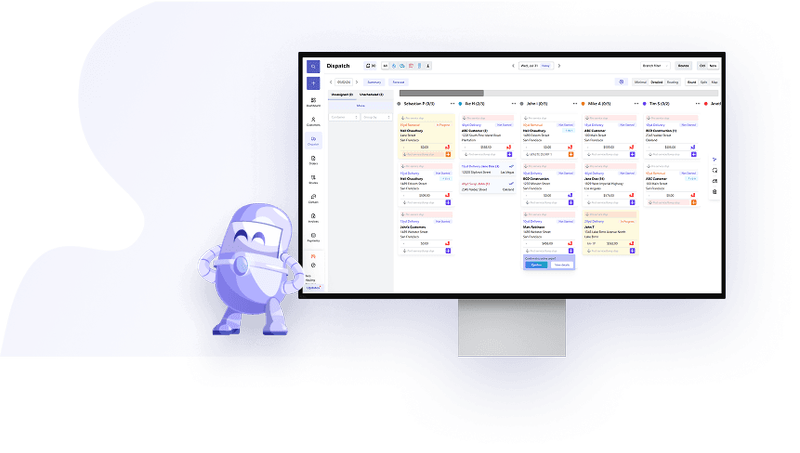
TrashLab keeps automated trash route scheduling, dispatch updates, driver proof, customer context, and billing handoff in the same workflow so route decisions turn into cleaner service records.
Related resources
Related guides, tools, and software
Use the glossary definition as a starting point, then jump into the workflow, benchmark, or calculator that makes the term practical.