Route Balancing
Learn what route balancing means in waste hauling, why it matters for routing, and how software buyers should evaluate it before rollout.
Plain-language definition
Route balancing is the process of spreading work across routes or days so driver hours, truck capacity, stop counts, and service risk stay manageable.
Why buyers ask about it
Unbalanced routes create overtime on one truck while another route has unused capacity. They also make customer service harder when late work becomes normal.
How software changes the workflow
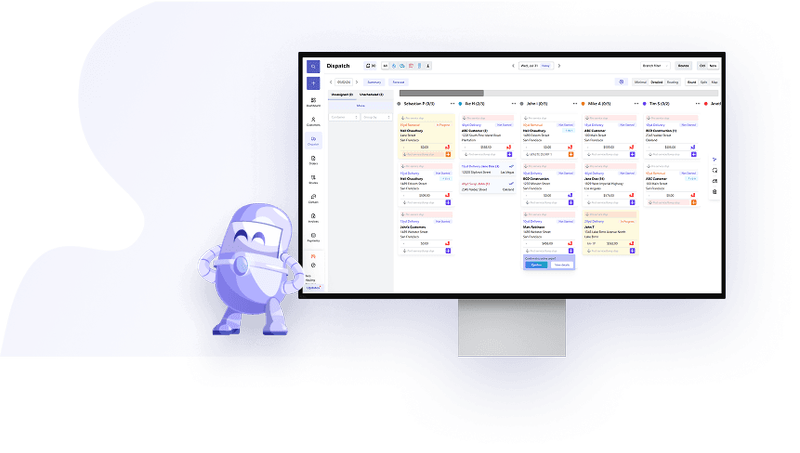
Software helps teams compare route load, time, stops, revenue, and exceptions so balancing decisions are based on operating reality instead of gut feel.
Related resources
Use route management software, waste route audit playbook, and route profitability calculator.
How this affects haulers
Routing and dispatch terms show up in daily service performance: route sequence, missed pickups, driver hours, same-day changes, customer calls, and billable exceptions.
How TrashLab handles this workflow
TrashLab keeps automated trash route scheduling, dispatch updates, driver proof, customer context, and billing handoff in the same workflow so route decisions turn into cleaner service records.
Related resources
Related guides, tools, and software
Use the glossary definition as a starting point, then jump into the workflow, benchmark, or calculator that makes the term practical.