Route Audit
Learn what a route audit is, which route signals to inspect, and how waste haulers use audits to improve density, profitability, and service reliability.
Plain-language definition
A route audit is a structured review of a route's work, geography, service frequency, exceptions, driver hours, disposal time, and revenue quality.
Key operating signals
- Revenue per driver hour is drifting below target.
- Deadhead miles, overtime, or disposal time are rising.
- Missed stops, late work, or same-day add-ons are becoming normal instead of exceptional.
Why it matters operationally
Routes often weaken gradually. A few isolated customers, a few extra pulls, and a few inherited schedule choices can turn a route into a margin problem before anyone notices from total revenue alone.
How software changes the workflow
A good audit uses route, billing, disposal, and service-exception data together. That is where garbage route planner, route profitability calculator, and weekly operating review routines overlap.
Related resources
Use the waste route audit playbook, then compare findings with route density guidance and the route profitability calculator.
How this affects haulers
Routing and dispatch terms show up in daily service performance: route sequence, missed pickups, driver hours, same-day changes, customer calls, and billable exceptions.
How TrashLab handles this workflow
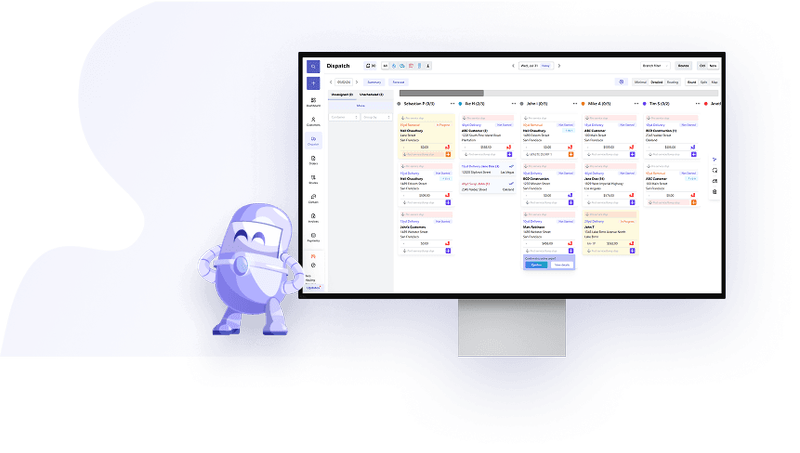
TrashLab keeps automated trash route scheduling, dispatch updates, driver proof, customer context, and billing handoff in the same workflow so route decisions turn into cleaner service records.
Related resources
Related guides, tools, and software
Use the glossary definition as a starting point, then jump into the workflow, benchmark, or calculator that makes the term practical.