Line of Business
Learn what line of business means in waste hauling, why it matters for software buying, and how software buyers should evaluate it before rollout.
Plain-language definition
A line of business is a distinct operating segment such as roll-off, commercial frontload, residential collection, portable toilet, recycling, or transfer work.
Why buyers ask about it
Software that fits one service line can fail in another. A buyer needs to know whether the same system can handle recurring routes, on-demand jobs, assets, disposal, and billing rules without workarounds.
How software changes the workflow
Good software lets each line of business keep its operational rules while sharing customers, reporting, receivables, and management visibility.
Related resources
Compare waste hauling software, commercial waste hauler software, and residential waste hauler software.
How this affects haulers
Industry definitions are useful when they connect back to operations: service planning, route density, disposal decisions, customer communication, compliance records, and margin visibility.
How TrashLab handles this workflow
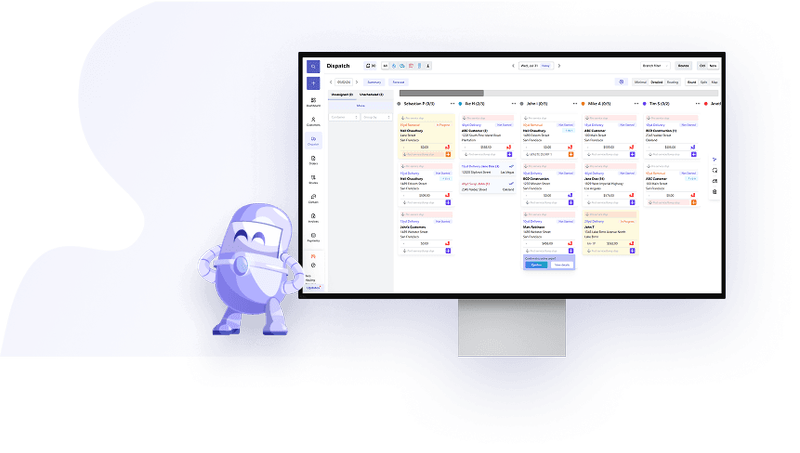
TrashLab turns those operating details into structured records across dispatch, routing, billing, reporting, and customer communication so haulers can act on the term instead of just define it.
Related resources
Related guides, tools, and software
Use the glossary definition as a starting point, then jump into the workflow, benchmark, or calculator that makes the term practical.