Landfill
Explore landfill waste disposal processes. TrashLab’s software tracks waste, ensures compliance, and optimizes landfill operations efficiently.
Landfill is a designated site for the disposal of solid waste, where waste materials are buried and managed to minimize environmental impact. Modern landfills are engineered with protective liners, leachate collection systems, and gas extraction systems to prevent contamination of soil and groundwater and to manage gases produced as waste decomposes, such as methane.
Landfills are typically used for waste that cannot be recycled, composted, or incinerated. While they offer a controlled environment for waste disposal, they require careful monitoring and maintenance to prevent environmental harm. Some landfills capture methane gas produced from decomposition to generate energy, adding an energy recovery benefit to the waste management process.
How this affects haulers
Industry definitions are useful when they connect back to operations: service planning, route density, disposal decisions, customer communication, compliance records, and margin visibility.
How TrashLab handles this workflow
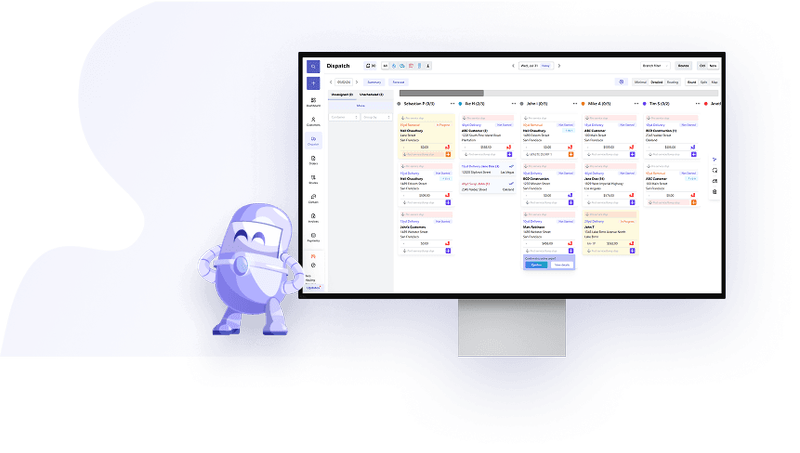
TrashLab turns those operating details into structured records across dispatch, routing, billing, reporting, and customer communication so haulers can act on the term instead of just define it.
Related resources
Related guides, tools, and software
Use the glossary definition as a starting point, then jump into the workflow, benchmark, or calculator that makes the term practical.