Container Turn
Understand container turns in roll-off operations and why faster, cleaner turnover affects asset productivity, dispatch pressure, and revenue per box.
Plain-language definition
A container turn is the completed cycle of a box being delivered, used by the customer, picked up or swapped, and made available for the next revenue-producing job.
Key operating signals
- Days in field are reviewed by container, customer type, and route.
- Extension pricing and pickup prompts are applied consistently.
- Idle inventory and aging boxes are visible before the team buys more containers.
Why it matters operationally
Container turns are the difference between a fleet that looks busy and a fleet that produces. Slow turns can make operators buy more boxes when the better fix is pickup follow-up, extension billing, or dispatch visibility.
How software changes the workflow
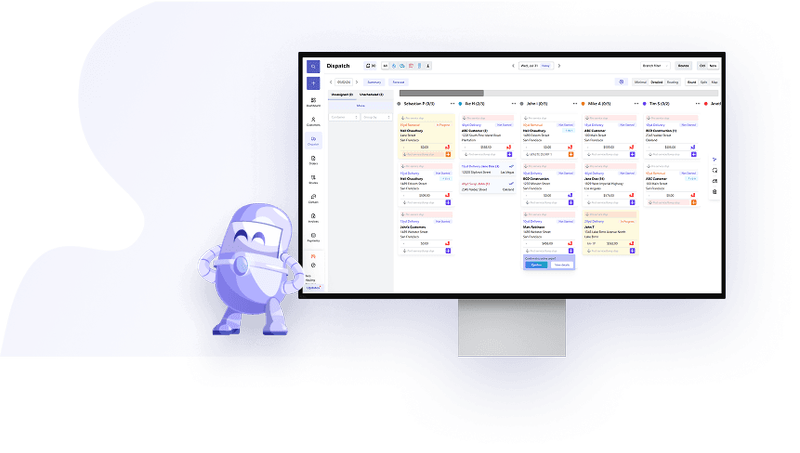
Strong container tracking software connects the asset record to dispatch, customer communication, and billing. That helps the team see whether the next constraint is demand, fleet size, follow-up, or pricing discipline.
Related resources
Start with how to reduce container dwell time, then run the container utilization calculator and compare price controls with the dumpster rental pricing calculator.
How this affects haulers
Container and hauling terms affect quote accuracy, dispatch capacity, disposal planning, dwell time, driver instructions, and whether extra days or services get billed.
How TrashLab handles this workflow
TrashLab ties orders, containers, dispatch moves, driver updates, disposal notes, and invoice review together so haulers can see what happened without rebuilding the day from texts.
Related resources
Related guides, tools, and software
Use the glossary definition as a starting point, then jump into the workflow, benchmark, or calculator that makes the term practical.