
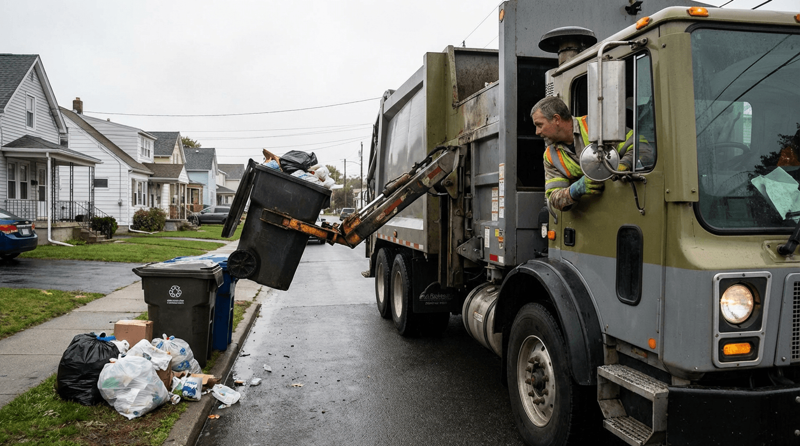
Crew safety
A heat plan only works if dispatch can run it
Waste collection crews cannot pause a hot route by policy memo. Heat controls have to show up in start times, route load, breaks, water access, and supervisor follow-up.
Compliance note
Use this as an operating guide, not legal advice
Heat safety requirements vary by federal, state, and local rule, and by the actual work, equipment, route design, labor agreement, and worker condition. Confirm your program with qualified safety professionals, counsel, and applicable OSHA or state-plan requirements before changing policy.
The quick answer
A heat safety plan for garbage truck drivers and helpers should cover water, rest, shade or cooling, acclimatization, symptom recognition, route scheduling, supervisor checks, and emergency response. The plan has to be operational, not just written.
OSHA heat stress guide and NIOSH heat stress guidance both frame heat as a real workplace hazard for outdoor and hot-environment workers. Waste collection adds heavy exertion, reflective pavement, PPE, truck heat, and route pressure.
Build the plan into the route day
| Operating layer | What good looks like | How dispatch can support it |
|---|---|---|
| Start-of-day planning | Supervisors know the forecast, heat index, route load, and new or returning workers | Flag high-risk routes and crews before trucks leave the yard |
| Water access | Drivers and helpers have enough cool drinking water for the route | Confirm water before dispatch and at mid-day check-in |
| Rest and cooling | Breaks are planned around actual heat and workload, not only the normal route pattern | Make break windows visible so route recovery does not erase them |
| Acclimatization | New, returning, or transferred workers build up exposure rather than absorbing a full heat load immediately | Pair staffing and route assignments with heat risk in mind |
| Emergency response | Crew knows who to call, where they are, and when to stop work | Capture location, symptoms, response, and follow-up in the route record |
Acclimatization is a dispatch problem
A new helper on a hot rearload route is not carrying the same risk as a tenured driver in the same weather. Returning workers after vacation, illness, injury, or reassignment may also need a ramp. That is not only a safety topic. It affects staffing, route assignment, overtime, and supervisor attention.
If the schedule treats every worker as interchangeable, the heat plan is already leaking before the truck leaves the yard.
Mid-day checks that are worth doing
- Ask about water remaining, not just whether the route is on pace.
- Check whether helpers are showing confusion, dizziness, unusual fatigue, cramps, or stopped sweating.
- Watch routes with heavy manual work, long disposal delays, or limited shade.
- Record heat-related incidents and near misses so they are reviewed like route exceptions.
- Give dispatch authority to slow or rebalance work when the safety signal is real.
The worst heat plans fail politely. Everyone agrees safety matters, then the radio conversation only asks how many stops are left. Make the safety questions part of the route conversation.
Do not hide heat risk inside productivity metrics
Stops per hour can drop on extreme heat days. That does not automatically mean the crew is weak or the route is bad. It may mean the plan is working. Review productivity next to heat exposure, route load, disposal time, and staffing before making performance judgments.
For the same reason, compare heat events against route design. A route that is marginal on a normal day can become unsafe when temperature, traffic, equipment issues, and heavy setouts stack together.
Frequently asked questions
What should a heat safety plan include for garbage truck drivers?
It should include water, rest, cooling or shade access, acclimatization, worker and supervisor training, symptom recognition, emergency response, and dispatch procedures for hot days.
Why are waste collection crews at heat risk?
Waste collection often combines outdoor heat, heavy physical work, PPE, pavement exposure, truck heat, time pressure, and long routes.
How can dispatch help prevent heat illness?
Dispatch can identify high-risk routes, confirm water and check-ins, preserve rest breaks, rebalance work, and treat heat symptoms as an operational stop signal rather than a delay.
What to do next
Use OSHA heat stress guide and NIOSH heat stress guidance as safety references, then review route load with the garbage route planner hub and capture field status through waste management driver app. If heat is exposing weak routes, run the route profitability calculator before simply pushing crews harder.