Waste Management Software
Learn what waste management software includes, why operators buy it, and how dispatch, routing, billing, and reporting fit together in one operating system.
Plain-language definition
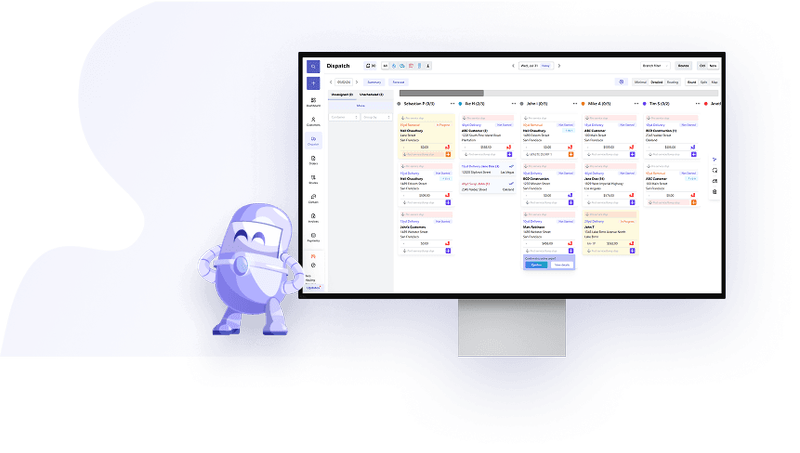
Waste management software is the system operators use to run intake, dispatch, routing, service proof, billing, payments, reporting, and customer communication inside one coordinated workflow.
Key operating signals
- Orders can move from request to scheduled work without re-keying data.
- Dispatch, route updates, and billing logic stay connected.
- Managers can review route, customer, and revenue metrics from one system.
Why it matters operationally
Without a unified system, waste businesses often end up with disconnected tools, manual cleanup, missed charges, and slow response times. A better operating system gives leadership cleaner visibility and reduces the number of places where revenue or service quality can leak.
How software changes the workflow
Good waste management software turns operational work into a tighter loop. Orders land faster, dispatch is easier to trust, billing captures more of what happened in the field, and reporting becomes usable for weekly reviews. That is why buyers often compare it first against waste hauler software, dumpster rental software, and the garbage route planner workflow.
Related resources
For a buying view, read waste management software comparison. For payback modeling, use the ROI calculator.
How this affects haulers
Software and billing terms affect how quickly work becomes cash: customer records, invoice accuracy, payment collection, service disputes, and the team's ability to answer account questions.
How TrashLab handles this workflow
TrashLab connects customer intake, dispatch outcomes, driver proof, billing rules, payments, and reporting so the office can move from completed work to invoice-ready records faster.
Related resources
Related guides, tools, and software
Use the glossary definition as a starting point, then jump into the workflow, benchmark, or calculator that makes the term practical.