Launch plan
The first version of the business should be narrow and operationally controllable
New operators usually get into trouble by buying too much equipment before they know which route shape, customer mix, and pricing model actually works in their market.
Start with a specific wedge
The best new dumpster rental businesses are usually narrower than the founders expect. They may start with one county, one contractor network, one debris mix they understand, and a small container fleet they can keep turning. That focus makes pricing, sales, dispatch, and disposal relationships much easier to control.
You do not need to serve every customer type on day one. You need a profitable first route system and enough demand to keep containers moving.
Your first 90-day operating checklist
| Window | Primary objective | What good looks like |
|---|---|---|
| Days 0-30 | Lock down legal structure, disposal, pricing, and equipment plan | Your business can legally operate and quote work with confidence |
| Days 31-60 | Launch the first sales channels and refine quoting | Real jobs are coming in and you can see which customer segments are profitable |
| Days 61-90 | Standardize dispatch, pickup, and billing routines | Jobs flow from quote to pickup to invoice without heroics |
Capital plan and disposal partnerships
Use the startup costs guide to model truck, container, insurance, software, and working-capital needs. Then tighten that estimate with the disposal terms you can actually get in your market. Disposal relationships matter early because they shape haul distance, acceptable debris, turnaround time, and pricing risk.
A weak disposal relationship can quietly poison the model. If tip fees are volatile or the closest facility is far away, your initial wedge should reflect that reality.
Pricing comes before growth
Before you chase lead volume, build a rate structure you can explain and defend. Use the dumpster rental pricing calculator to standardize base rate, included tons, extension fees, and overage rules. If you plan to serve construction-heavy accounts, also review the roll-off pricing calculator so you understand how debris profile changes margin.
A surprising number of new operators win early business with weak pricing, then discover that busy containers and strong reviews do not automatically translate into cash.
Dispatch and billing need structure early
Even if the business is small, write down how jobs are captured, scheduled, completed, and invoiced. Without a clear dispatch and billing routine, growth will expose every hidden inconsistency.
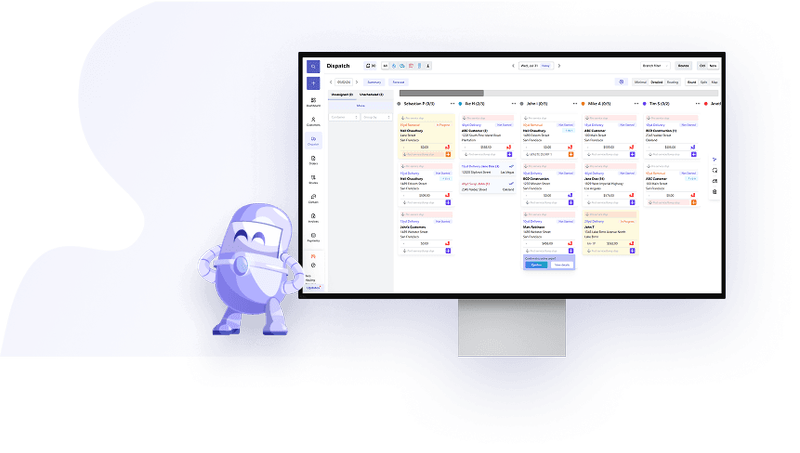
This is where dumpster rental software matters. Good software does not need to be overbuilt on day one, but it should help you capture orders cleanly, schedule the fleet, document exceptions, and invoice from real service data.
A simple early-stage workflow
- Use a single intake process for calls, texts, and web inquiries.
- Standardize quote templates, rate cards, and approved exceptions.
- Record delivery, pickup, extension, contamination, and dry-run events the same way every time.
- Use invoice templates until your billing workflow is fully inside software.
How to find the first customers
The first customers usually come from contractor relationships, local SEO, referrals, and fast quote response. Response speed matters more than most teams expect. If a prospect calls three dumpster companies, the one that responds clearly and quickly often wins.
That is why pairing a basic sales motion with tight operations is so powerful. A strong close rate on bad operations is still bad business.
Frequently asked questions
How much does it cost to start a dumpster rental business?
It depends on truck choice, container count, insurance, disposal relationships, and working capital. Use a modeled estimate, not a forum guess, because the capital range is wide.
How many containers should I start with?
Start with the smallest fleet that lets you serve your initial market reliably. More containers do not help if your early routes and pricing are still loose.
Should I buy software immediately?
Most operators benefit from setting up a clean software-supported workflow early, especially for intake, scheduling, and billing. Waiting too long usually creates messy migration work later.
What is the biggest early mistake?
Expanding equipment or territory before pricing, disposal, dispatch, and billing are stable is one of the most common early mistakes.
What to do next
Use the startup costs guide to pressure-test the capital plan, then build your quote structure with the dumpster rental pricing calculator. After that, review dumpster rental pricing models and the dumpster rental software page so your launch plan and operating stack stay aligned.