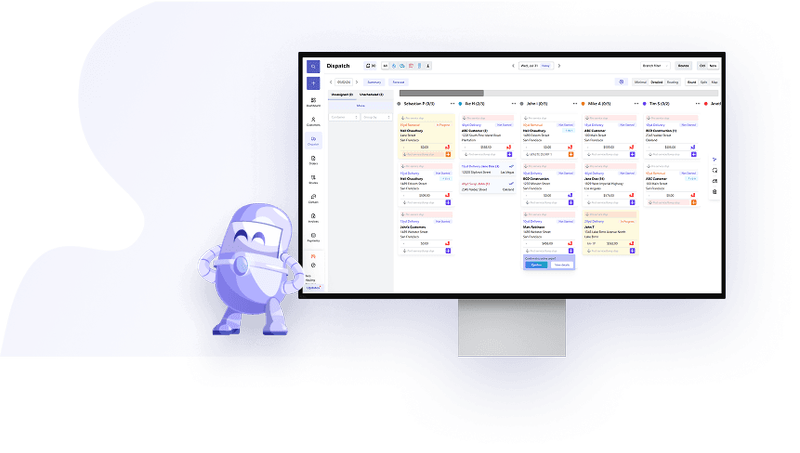
Dispatch benchmark
Dispatcher pay should reflect operational complexity
A dispatcher covering one recurring line of business is not carrying the same cognitive load as a dispatcher coordinating multiple services, same-day work, and constant exceptions.
What changes dispatcher compensation
Dispatcher pay is driven by market wage pressure, coverage expectations, line-of-business mix, the number of drivers or routes supported, and how much exception handling the role absorbs. In weaker systems, dispatchers also end up doing cleanup work that should have been solved upstream in quoting, service setup, or route planning.
That is why compensation reviews should look at workflow design as well as title and tenure.
Three common dispatcher scopes
| Dispatcher scope | Typical pressure | What justifies higher pay |
|---|---|---|
| Single-line recurring routes | Stable schedule, fewer same-day changes | High route count, difficult market, or off-hours coverage |
| Mixed recurring plus same-day work | Constant prioritization and more customer callbacks | Multi-board ownership and stronger exception judgment |
| Multi-line operations dispatch | Multiple service models, asset coordination, more billing implications | Cross-line ownership, escalation handling, and training others |
How to keep dispatcher compensation tied to real leverage
When dispatch is standardized, compensation decisions get easier because role scope is clearer. When every dispatcher is running a different playbook, pay conversations get political fast. That is why stronger teams document board ownership, escalation rules, and handoff expectations before revisiting compensation bands.
This article pairs naturally with how to standardize dispatch for multi-line haulers.
Frequently asked questions
How much do waste management dispatchers make?
Dispatcher pay varies by geography, shift coverage, line-of-business complexity, and how much operational judgment the role carries day to day.
Should dispatchers in multi-line operations earn more?
They often should when the role truly manages more complexity, more exceptions, and more billing-impacting decisions than a simpler recurring-route role.
What makes dispatcher work harder than the title suggests?
Poor upstream data, route instability, unclear escalation rules, and last-minute same-day work can all make the job materially harder.
What to do next
Use the waste industry salary atlas to compare dispatcher compensation against nearby roles, then tighten dispatch scope and routing expectations with the garbage route planner hub and the dispatch standardization guide.