Route benchmark
Fuel savings are the visible win, but route quality is the bigger prize
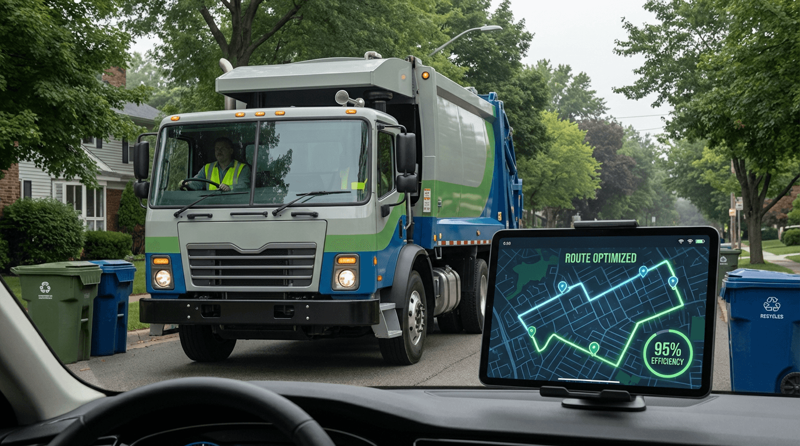
A better route is not just fewer miles. It is fewer surprises, fewer late-day misses, more stops per driver hour, and stronger confidence in tomorrow's board.
Why route optimization matters beyond fuel
Fuel gets the headline because it is easy to measure, but route optimization creates leverage across the operation. Better sequencing reduces wasted drive time, protects driver hours, improves on-time service, and gives dispatch a cleaner picture of what capacity is still left in the day.
That is why operators who rely on the garbage route planner mindset usually pair it with route profitability reviews, not just fuel dashboards.
The metrics to watch before and after optimization
| Metric | What good looks like | Why it matters |
|---|---|---|
| Miles per route day | Trending down without creating service risk | Lower miles reduce fuel, maintenance, and idle driver time |
| Stops per driver hour | Trending up on comparable route types | Productivity improves when density and sequencing improve together |
| On-time completion | Fewer late-day spillovers and rework | Customer experience improves when dispatch can trust the plan |
| Exception volume | Fewer ad hoc manual corrections | Reduced exception handling means lower admin drag |
What to clean up before you optimize
Route optimization works best when your stop data is real. Clean addresses, service windows, service times, container notes, gate codes, and driver constraints matter more than many teams admit. Bad data does not disappear inside an algorithm; it scales.
If a route feels unpredictable today, first ask whether the operational data is incomplete. Then ask whether the route is sparse, overloaded, or constantly interrupted by same-day work. Those are different problems and require different fixes.
Density and sequencing are different problems
Sequencing is the order of stops. Density is how much valuable work exists in a geographic area. Optimization software is excellent at sequencing. It can help with density analysis too, but it cannot invent density that does not exist.
That is why this guide should be paired with how to improve route density for waste haulers. High-performing teams improve territory shape, customer mix, and dispatch rules at the same time.
How good teams operationalize route optimization
- Run daily route reviews with yesterday's exceptions and today's constraints visible together.
- Separate recurring route work from same-day opportunistic work so dispatch does not blur both.
- Track route profitability, not only route completion.
- Use driver feedback to improve service times and unrealistic assumptions.
- Tie route changes back into the waste hauler software system so billing and service proof stay aligned.
Frequently asked questions
How much can route optimization save a waste hauler?
Many operators see meaningful fuel and labor improvements, but the bigger value often comes from better route control, fewer late-day misses, and stronger dispatcher confidence.
What data do I need before using route optimization software?
Clean stop addresses, service times, driver and truck constraints, service windows, and route exceptions are the most important starting points.
Can route optimization help small fleets?
Yes. Small fleets often benefit quickly because their routing logic still lives in dispatcher memory, which makes improvement highly visible.
What is the difference between route density and route optimization?
Route density is about having enough nearby revenue to create a strong route. Route optimization is about sequencing and executing that route well once the work is there.
What to do next
Review your routes with the route profitability calculator, then pressure-test the territory side with our route density guide. If you are comparing systems, use the software comparison guide alongside the garbage route planner product page.