Residential Waste
Learn what residential waste means operationally and how stop density, route quality, and service consistency shape residential hauling economics.
Plain-language definition
Residential waste is the waste collected from households, including regular trash, recycling, organics, and related curbside or multifamily services.
Key operating signals
- High stop count and route density matter more than revenue per individual stop.
- Service quality depends heavily on route design and schedule reliability.
- Franchise or municipal constraints often shape pricing and territory decisions.
Why it matters operationally
Residential operations can be very strong when routes are dense and repeatable, but margins tighten quickly when overtime, poor sequencing, or low-density territory creeps in. It is a different economic profile than open-market commercial work.
How software changes the workflow
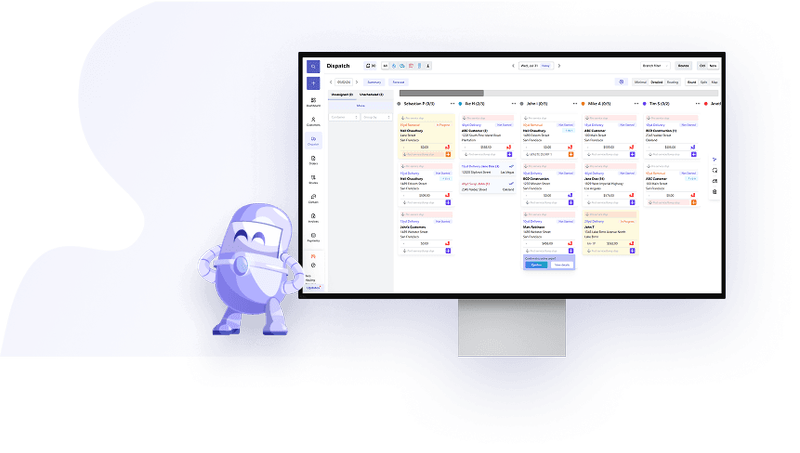
Residential fleets benefit from strong route planning, dispatch visibility, and service history because those systems reduce missed stops and help teams manage very high stop volumes with less friction.
Related resources
Compare the segment economics in commercial vs residential waste collection and review route workflows in the garbage route planner hub.
How this affects haulers
Industry definitions are useful when they connect back to operations: service planning, route density, disposal decisions, customer communication, compliance records, and margin visibility.
How TrashLab handles this workflow
TrashLab turns those operating details into structured records across dispatch, routing, billing, reporting, and customer communication so haulers can act on the term instead of just define it.
Related resources
Related guides, tools, and software
Use the glossary definition as a starting point, then jump into the workflow, benchmark, or calculator that makes the term practical.