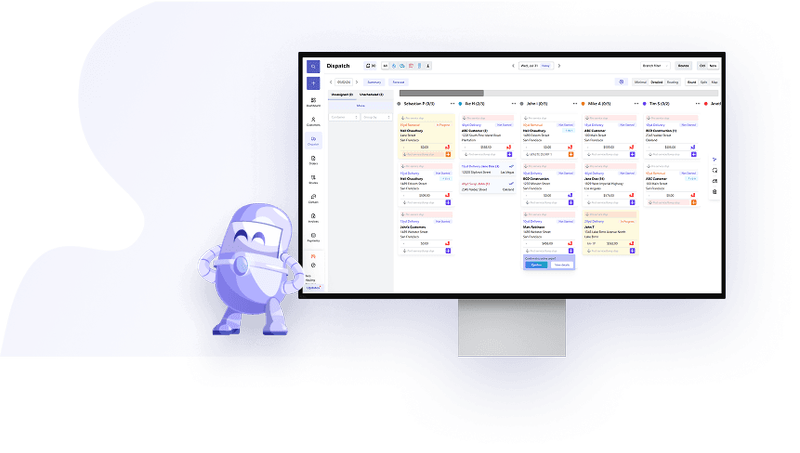
Dispatch Routing Software
Learn what dispatch routing software is and how it improves efficiency. TrashLab’s platform streamlines dispatch, routing, and fleet management.
Dispatch Routing Software is a tool designed to optimize the scheduling, assignment, and routing of vehicles and drivers for delivery, service, or waste collection operations. By using algorithms and real-time data, dispatch routing software efficiently assigns routes to drivers based on factors like distance, traffic, service windows, and load capacity. This technology helps companies reduce fuel costs, improve on-time performance, and increase productivity.
Key features often include:
Automated Route Planning: Optimizes routes for minimal travel time and fuel usage.
Real-Time Tracking: Monitors vehicle locations and driver progress for timely updates.
Dynamic Rescheduling: Adjusts routes in real-time to accommodate last-minute changes or delays.
Driver Communication: Provides turn-by-turn navigation and updates to drivers through a mobile app.
Dispatch routing software is commonly used in logistics, transportation, field services, and waste management to streamline dispatch operations, enhance customer service, and support eco-friendly, efficient operations.
How this affects haulers
Routing and dispatch terms show up in daily service performance: route sequence, missed pickups, driver hours, same-day changes, customer calls, and billable exceptions.
How TrashLab handles this workflow
TrashLab keeps automated trash route scheduling, dispatch updates, driver proof, customer context, and billing handoff in the same workflow so route decisions turn into cleaner service records.
Related resources
Related guides, tools, and software
Use the glossary definition as a starting point, then jump into the workflow, benchmark, or calculator that makes the term practical.