Rolloff Trucks
Learn what rolloff trucks are, how they fit into roll-off hauling, and why dispatch, container turns, and disposal logistics matter for profitable rolloff operations.
Plain-language definition
Rolloff trucks are vehicles built to deliver, swap, and retrieve large open-top containers used for construction debris, cleanouts, demolition waste, and related bulky material jobs.
Key operating signals
- Truck time is shaped by delivery, pickup, swap, and disposal patterns.
- Revenue depends on both job pricing and container turns.
- Dispatch quality affects route productivity more than many new operators expect.
Why it matters operationally
Rolloff work can be high-value, but it is also operationally sensitive. Poor pricing, weak scheduling, and slow container turns can make a busy fleet look successful while margin and asset productivity deteriorate.
How software changes the workflow
Good software helps operators connect box location, truck scheduling, service proof, and billing. That creates better visibility into which equipment is producing profit and which patterns are creating drag.
Related resources
Review how to start a dumpster rental business, dumpster rental pricing calculator, and the container utilization calculator.
How this affects haulers
Container and hauling terms affect quote accuracy, dispatch capacity, disposal planning, dwell time, driver instructions, and whether extra days or services get billed.
How TrashLab handles this workflow
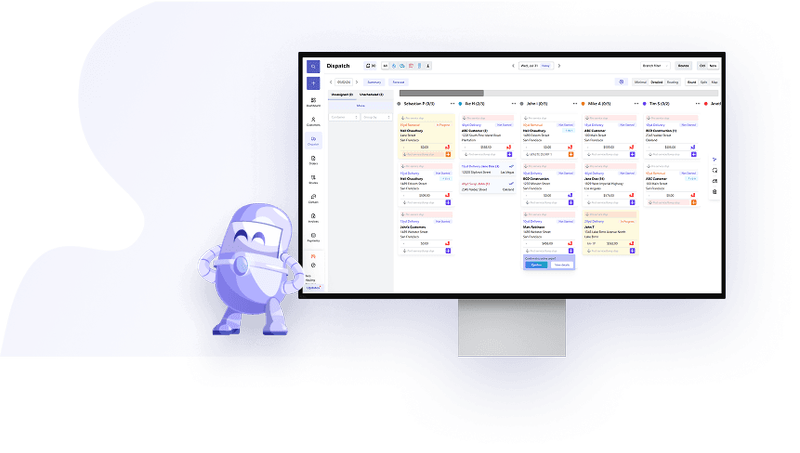
TrashLab ties orders, containers, dispatch moves, driver updates, disposal notes, and invoice review together so haulers can see what happened without rebuilding the day from texts.
Related resources
Related guides, tools, and software
Use the glossary definition as a starting point, then jump into the workflow, benchmark, or calculator that makes the term practical.